


- The chain disaster caused by the sulfuric acid gun incident and the industry warning
Sulfur gun - the "heart" of the sulfuric acid production plant
The sulfur gun is the core and vital component of the sulfur acid production facility. It appears merely as a spray gun on the sulfur incinerator, yet it governs the operational safety and production efficiency of the entire system. The performance of the sulfur gun directly determines whether a set of facilities can operate for a long period of time, with high efficiency, safety and stability.
However, this seemingly simple "component" has become a persistent problem plaguing the sulfuric acid industry for many years.
According to statistics, during the operation of the sulfuric acid production plant, unplanned shutdowns caused by sulfur gun issues account for over 30% of the total. The failure rate of sulfur guns is much higher than that of operating pumps, static equipment leaks, and electrical and instrumentation failures. The cumulative annual loss due to sulfur gun problems and equipment replacement costs in the entire industry exceeds 100 million yuan.
This is not an overstatement. When the fuel injector malfunctions - whether it becomes bent, loses its atomization efficiency, or experiences leakage - it will trigger a series of irreversible production accidents.
I. The Tragedy of the Sulphur-Burning Furnace: Structural Collapse Under High Temperature
Once the sulfide gun is bent or fails to atomize properly, the liquid sulfur cannot be fully combusted in the furnace but instead directly sprays onto the refractory brick surface. Under high temperatures, the insulation bricks are constantly subjected to abnormal thermal shock, first cracking and peeling off, and then falling off in large chunks, severely damaging the furnace structure.
.jpg)
The refractory bricks inside the sulfur incinerator have suffered extensive cracking and detachment, and the furnace structure is in a precarious state.
Severely, it might even burn through the furnace shell, and sulfur would seep out through the cracks, condensing into glaring yellow crystals on the outer wall of the furnace. The entire device was forced to be shut down, and the repair period often lasted for several weeks, resulting in economic losses far exceeding the value of the equipment itself.
.jpg)
The shell of the sulfur incinerator was burned through, causing a large amount of sulfur to leak and condense.
.jpg)
After the sulfur incinerator was damaged, a large number of workers were needed for the repair work, which took several weeks.
II. The Ascension of the Sulfur Catastrophe: The Spread of the "Sulfur Disaster" from the Sulfur Incinerator to the Drying Tower
The liquid sulfur with insufficient atomization cannot be completely burned in the sulfur incineration furnace, resulting in a large amount of sublimated sulfur. These gaseous sulfur enters the subsequent system along with the smoke, condenses and blocks in the catalyst pores, causing the catalyst to deactivate and the conversion efficiency to drop significantly. The sublimated sulfur reacts with iron to form iron sulfide, which remains on the catalyst surface, leading to a sharp increase in system resistance.
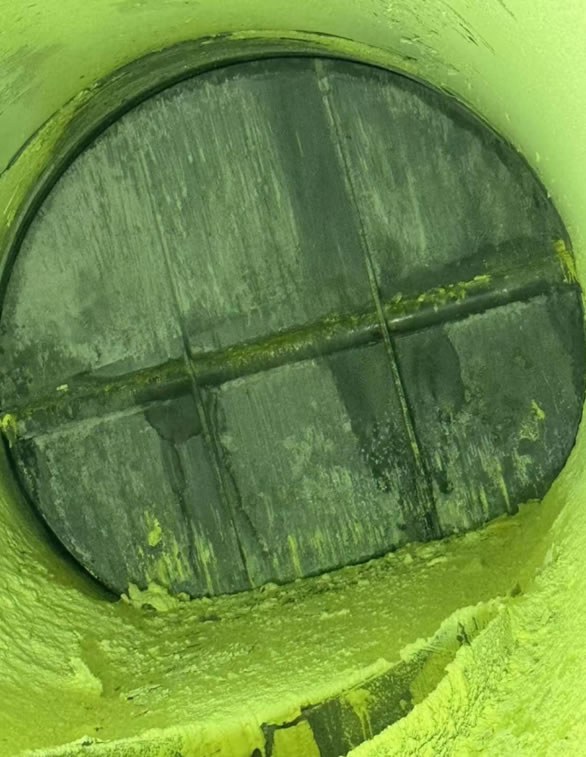
The large amount of sublimated sulfur in the inlet flue gas pipeline of the sulfur incinerator
Even more terrifying is that - when the device suddenly stops operating, in the oxygen-deficient environment of the sulfur incinerator at high temperature, the sulfur that has not yet been burned undergoes significant gasification and forms sublimated sulfur. This sublimated sulfur flows back along the smoke gas pipeline to the drying tower and eventually condenses into solid sulfur on the wire mesh demisting device or the fiber demisting device.
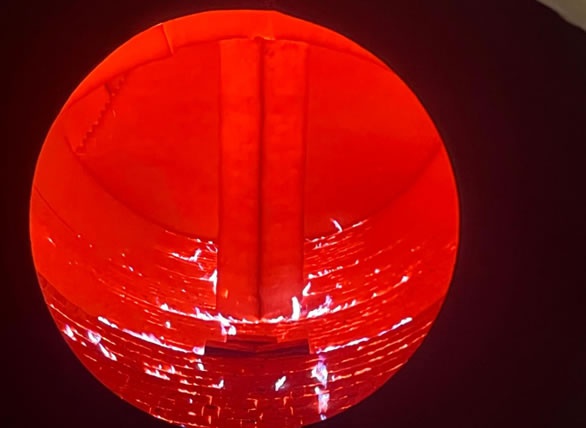
After parking, the "ghost fire" produced by the sublimation of sulfur in the sulfur incinerator was truly shocking.
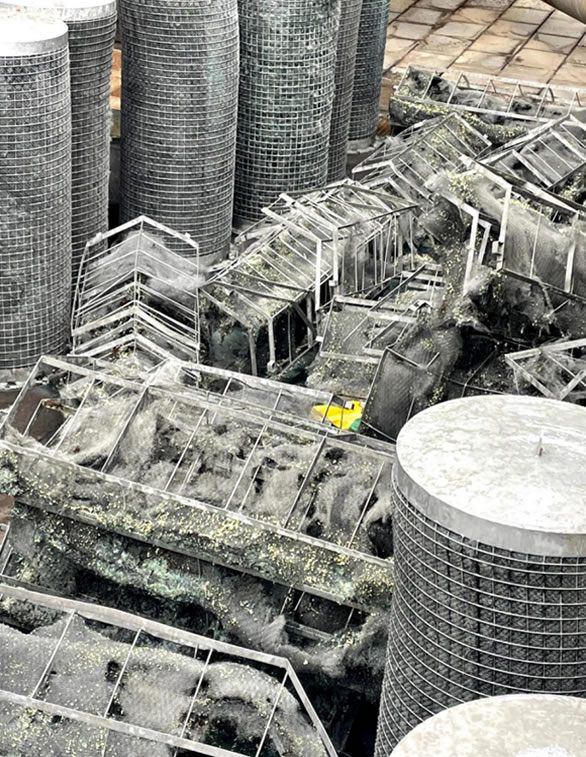
The mist eliminator screen was severely clogged with sulfur crystals, and the ventilation cross-section was almost completely lost.
The demister originally used for gas-liquid separation has now become a "sulfur accumulation device". The system resistance has soared, the fan load has sharply increased, and eventually the equipment was forced to be shut down for maintenance. An unexpected shutdown often means direct losses of several million to tens of millions of yuan, not to mention the market opportunity cost during the downtime.
III. What are the causes? Bending, blockage, and poor atomization are the three main culprits.
The faults of the sulfur gun seem to be numerous, but in the end, they can be classified into three core issues:
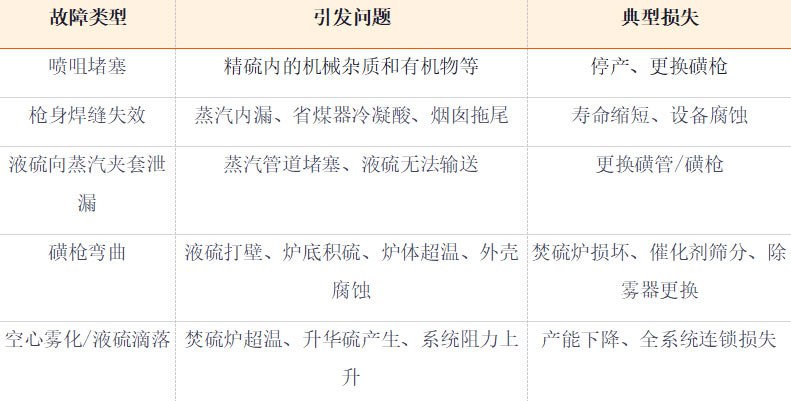
Table 1: Common Fault Types and Losses of Sulfur Guns (Data Source: Industry Operation Statistics)
The bending of the sulfur gun is not merely due to poor manufacturing quality. The deeper reason lies in the fact that the sulfur gun has been exposed to high-temperature and high-corrosion environments for a long time. Different parts of the gun body are heated unevenly, and thermal stress accumulates continuously, eventually causing permanent deformation. After bending, the sulfur gun will spray the liquid sulfur off-center, onto the surface of the refractory bricks instead of the center of the furnace. The liquid sulfur accumulates at the bottom of the furnace, laying the foundation for the subsequent sublimation sulfur disaster.
Poor atomization is the main cause of the accumulation of liquid sulfur at the bottom of the sulfur incineration furnace. When the liquid sulfur cannot be fully atomized into micron-sized droplets, its specific surface area significantly decreases, and the efficiency of contact with air sharply declines. The incompletely burned liquid sulfur settles at the bottom of the furnace, and this liquid sulfur will seep into the gaps of the refractory bricks and penetrate the insulation layer of the furnace body. Under the action of high temperature, these remaining liquid sulfur not only corrodes the furnace shell, but also solidifies into lumps after the device is shut down, causing the refractory bricks structure to crack.
IV. Industry Call: Overcoming the Problem of Sulfur Gun Must Be Addressed Urgently
To completely solve the problem of the sulfur gun, two core goals must be achieved:
First, ensure that the liquid sulfur is completely combusted within the sulfur incinerator, and guarantee that there is no residual liquid sulfur. Only when no more sulfur accumulates at the bottom of the furnace can the generation and diffusion of sublimated sulfur be fundamentally prevented.
Second, completely solve the problem of the bending of the sulfide gun. This requires systematic optimization in aspects such as material selection, structural design, and thermal stress management, to ensure that the sulfide gun maintains precise spraying angle and atomization effect under extreme working conditions.
Although the sulfur gun is small, it can have a significant impact. From the sulfur incinerator to the converter, from the catalyst to the demisting device, every step could be completely ruined due to that tiny sulfur gun.
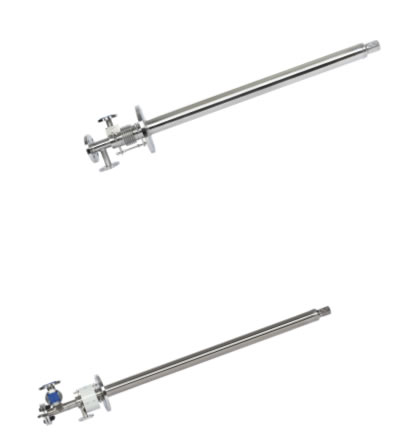
Solving the core problems of the sulfide gun is an urgent common demand for the entire industry.