


- Sulfur gun malfunctions account for 30% of unplanned shutdowns! Let's see how LKD's anti-blocking sulfur gun solution works.
Introduction
In the sulfuric acid production plant, the sulfone gun is the core equipment. Its atomization performance and quality directly determine whether the plant can operate in a long-term, safe, environmentally friendly, and economical manner. Data statistics show that during the operation of the sulfuric acid production plant, unplanned shutdown incidents caused by the sulfone gun account for more than 30%. Its failure rate is significantly higher than that of running pumps, leakage of static equipment, and electrical instrument failures. Among various sulfone gun failures, "blockage" and "expansion joint overpressure damage" are the most typical and costly problems. Today, we will analyze the two major pain points in the production site and understand the design starting point of the LKD series anti-block sulfone gun.
Two core fault sources on-site
Fault 1: Frequent blockage of the sulfone gun, forced production reduction and shutdown
The liquid sulfur pipelines and storage tanks mostly use carbon steel materials. Equipment corrosion produces sulfuric iron solid impurities, which are mixed into the liquid sulfur medium and transported to the sulfone gun. The impurities continuously accumulate in the nozzle and flow path, causing the sulfone gun to be blocked, directly triggering production reduction or even emergency shutdown.
The traditional solution is to install an external filter on the pipeline, but it has obvious shortcomings: occupying a large amount of on-site space, and the difficulty of implementing insulation and heating; when the insulation fails, liquid sulfur is prone to solidify inside the filter, and the filter instead becomes a new blockage point.
Fault 2: Overpressure damage of the expansion joint, leading to leakage and safety risks
The sulfone gun is inserted into the incineration furnace and is in a high-temperature working condition for a long time. When the plant is short-term shut down, the furnace temperature is still above 300℃, or there is a personnel error operation, and the insulation steam inlet and outlet valves are simultaneously closed, the condensed water remaining in the jacket is rapidly vaporized by the high-temperature furnace, and the pressure surges instantly.
The wall thickness of the expansion joint is only 0.8mm, which is the weakest component of the entire sulfone gun. The design pressure is only 1.6MPa. When the pressure exceeds the limit, it will burst, causing steam medium leakage and even posing a risk of personal injury.
LKD anti-block sulfone gun: Dual protection of source filtration and end pressure relief
Rizhenglai Technology, based on the mature LGS4 efficient sulfone gun technology, has iteratively upgraded the LKD series anti-block sulfone gun. It fully inherits the four core technologies and adds two new safety protection configurations, avoiding the above two types of accidents from the source.
1. Integrated liquid sulfur inlet precision filter: The filter is directly integrated at the sulfone gun's liquid sulfur inlet position, with a built-in steam insulation jacket. Before the liquid sulfur enters the gun body, sulfuric iron and solid impurities are intercepted, eliminating the causes of blockage at the source and avoiding the drawbacks of external filters.
2. Insulation steam overpressure protection safety valve: The safety valve is configured in the steam jacket, and when the pressure in the jacket abnormally rises to the set pressure, it automatically jumps and releases pressure, confining the pressure within the safe range of the expansion joint and serving as the last line of defense for the equipment.
Important reminder: The safety valve is a protective bottom component and cannot replace proper operation. Under any circumstances, it is strictly prohibited to simultaneously close the insulation steam inlet and outlet valves.
Through the combined design of "source filtration to prevent blockage + end pressure relief protection", the number of unplanned shutdowns caused by sulfone gun failures is reduced, helping enterprises avoid economic losses caused by production shutdowns.
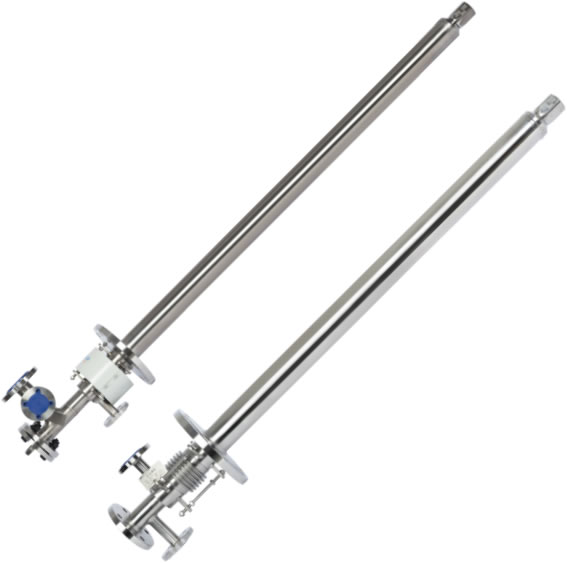
LGS4 High-Efficiency Sulfur Gun
Inheriting four core advanced technologies
1. Solid Cone Atomization Layered Combustion Technology
The atomization nozzle of this technology presents a rotating solid cone shape, enabling the layered combustion of sulfur. This technology effectively avoids the front-end oxygen deficiency problem caused by the surface explosion of the hollow cone atomization nozzle. There is no sublimation sulfur production, no post-combustion shift, and no over-temperature in the sulfur incinerator.
The Speed-up Forced Atomization Technology can easily meet the low-load requirements during the initial start-up of the device. It also has the ability to operate at over 120% load without overheating. This technology ensures that 99% of the liquid sulfur burns in the furnace atmosphere without any liquid sulfur dripping, thereby ensuring that the device will not be blocked by the drying tower's wire mesh desulfurizer due to sublimation sulfur during start-up and shutdown, nor will it cause an increase in fan vibration. In addition, the SO₂ emissions from the exhaust gas during start-up will not exceed the standard, avoiding the occurrence of smoke accidents and ensuring the safe and environmentally friendly start-up of the device.
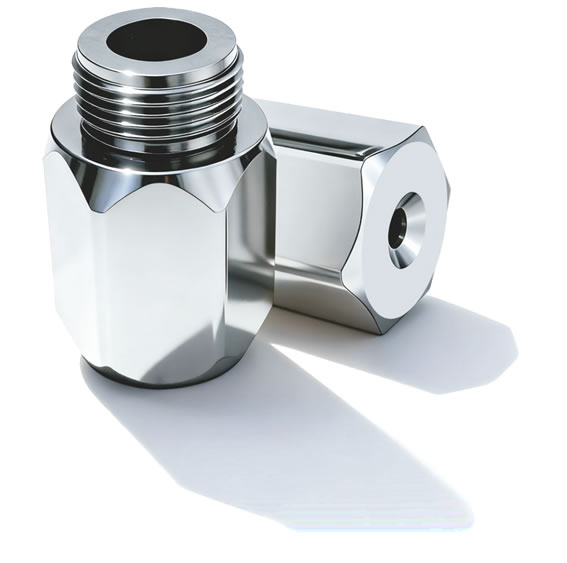
Nozzle (Solid Cone Atomization Layered Combustion Technology))
2 Gun Body Uniform Temperature Technology
The sulfur gun device is installed inside the sulfur incinerator. The gun body of the sulfur gun will be affected by thermal expansion under high-temperature conditions. The gun body is made of 310S metal material, with an expansion coefficient of approximately 16.6×10⁻⁶ (1/℃). According to the calculation formula h1 = h0(1 + a×ΔT), considering that the length of the gun body is usually between 2 and 3 meters, and the external environment temperature of the sulfur incinerator is about 400℃ during operation, and it rises to approximately 900℃ after shutdown. By using this formula, the expansion amount of the gun body after shutdown is approximately 10 to 15 millimeters. If the internal steam distribution of the gun body is uneven, causing temperature differences on both sides of the gun body, then the expansion amounts on both sides will also be inconsistent, and thus the gun body will bend upwards. To solve this problem, we have independently developed the gun body uniform temperature technology. This technology ensures that regardless of whether the sulfur incinerator is in operation or shutdown, the temperature distribution of the gun body is 360° uniform and the expansion amount remains consistent, effectively avoiding the occurrence of gun body bending problems.
3 Large Flow Channel Straight Through Technology
The sulfur gun is the core equipment in the device. Its service life needs to meet the planned operation cycle of the device. The anti-block sulfur gun nozzle adopts large flow channel straight through technology (with a flow area of 376mm²), and is equipped with a block prevention cone, which can enable fine particles to pass smoothly; at the same time, a precision filter is newly added at the liquid sulfur inlet (see the next chapter), intercepting the sulfuric iron particles that may block the nozzle before they enter the gun body, forming a dual prevention guarantee of "filter interception + large flow channel passage", which can meet the usage requirements of the anti-block sulfur gun during its operation cycle. The efficient nozzle is made of ultra-low iron wear-resistant alloy, which can effectively isolate the reaction between iron and sulfur at high temperatures, preventing corrosion caused by the formation of sulfuric iron, making the nozzle more durable.
4 High Diameter Pressure-bearing Butt Welding Technology
The device often stops due to steam or liquid sulfur leakage from the sulfur gun. This is because the sulfur gun is manufactured by welding three layers of jacket pipes. Given that the environment where the sulfur gun is located has a high temperature, and the diameters of each layer of the jacket pipe are different, after thermal expansion, the stress will concentrate at the weak welding parts. When there are minor welding defects such as slag, pores, and hydrogen cracks at the welding position, due to the stress concentration, the welding will fail, and thus steam or liquid sulfur leakage occurs. Therefore, an effective welding technology is the only technical means to solve the problem of sulfur gun leakage. The weld seam of the anti-block sulfur gun in the sulfur incinerator is welded using high diameter pressure-bearing welding technology, and pure 99.999% high-purity argon gas is used for all-round protection, achieving high-quality welding technology of single-side welding and double-side forming. Moreover, combined with 100% non-destructive testing of the weld seam, it effectively avoids welding defects and design defects, making the anti-block sulfur gun more durable.
In the next post, we will disassemble two new functional components: the precision filter, the overpressure safety valve, and the internal details and selection parameters of the efficient nozzle. Chemical professionals should not miss it.