


- The impact of high-precision bellows valves on the service life of catalysts - A technical breakthrough and practical value in precisely controlling the inlet temperature of catalysts at the first section of the sulfuric acid plant
[Introduction: How can a single valve determine the "life and death" of a catalyst?]
In the vast system of sulfuric acid production, there is a seemingly insignificant but crucial component - the bell jar valve. It is installed quietly on the inlet pipe of the converter section, undertaking the crucial responsibilities of regulating the intake air temperature and ensuring the stable operation of the catalyst. However, this valve directly affects the service life of the catalyst worth millions of yuan, and consequently determines the operation cycle, product quality and economic benefits of the entire sulfuric acid plant.
For a long time, the problems of insufficient adjustment accuracy, slow response and poor performance of traditional bellows valves have been a "hidden pain" for sulfuric acid production enterprises. Frequent fluctuations in the inlet temperature of the catalyst section not only lead to a decrease in conversion rate and excessive tail gas emissions, but also accelerate the aging and deactivation of the catalyst, significantly shortening its replacement cycle. According to industry statistics, premature catalyst deactivation due to improper temperature control causes direct economic losses of hundreds of millions of yuan to the domestic sulfuric acid industry every year.
Now, with the advent and wide application of high-precision bellows valves, this industry problem has finally received a better technical solution path. This article will deeply analyze the technical principles, core advantages and far-reaching impact of high-precision bellows valves on the service life of the catalyst, providing useful references for the technological upgrading and cost reduction and efficiency improvement of sulfuric acid production enterprises.
1. The root cause of the problem: Why is precise control of the inlet temperature of the section so important?
1.1 The "temperature code" in the sulfuric acid conversion process
In the contact process of sulfuric acid production, sulfur dioxide (SO₂) is oxidized by the catalyst to form sulfur trioxide (SO₃), which is the core process of sulfuric acid production. The activity and selectivity of the catalyst, especially the vanadium catalyst, are extremely sensitive to the reaction temperature.
Take the mainstream sulfuric acid plant as an example, the optimal inlet temperature of the catalyst section is usually controlled between 400°C and 420°C. The operation requires a fixed temperature value, with a temperature window of 1°C, and the catalyst can achieve the highest catalytic activity, with the SO₂ conversion rate reaching over 99% of the design value. However, if the temperature deviates from this optimal range, whether too high or too low, it will have a significant impact on the performance and lifespan of the catalyst.
1.2 The positive temperature enhancement characteristic: The "one-way door" for catalyst operation
It is particularly important to note that the catalyst of the sulfuric acid plant has a significant positive temperature enhancement characteristic. This means:
• When the temperature rises: The catalyst's activity increases, the conversion rate rises, and the reaction rate accelerates;
• When the temperature drops: The catalyst's activity decreases, the conversion rate drops, and this decline often has "lagging" and "cumulative" characteristics - even if the temperature returns to the original set value, the catalyst's activity is difficult to fully recover, and some of the lost activity is irreversible.
This "forward easy, reverse difficult" temperature characteristic determines the core principle of catalyst operation management: It is better to slowly increase the temperature rather than frequently fluctuate; it is better to operate at a slightly higher temperature rather than significantly drop it back.
1.3 Hazards of temperature fluctuations: From conversion rate decline to catalyst deactivation
In actual production, the fluctuations in the temperature of the first-stage inlet mainly bring the following aspects of hazards:
(1) Conversion rate decline, directly affecting production and environmental protection
When the temperature drops, the catalyst's activity decreases, and the SO₂ conversion rate also drops. Taking a 600,000-ton/year sulfuric acid plant as an example, every 0.5% decrease in conversion rate will result in an annual reduction of about 2,000 tons of sulfuric acid production, with direct economic losses exceeding several million yuan. At the same time, the unconverted SO₂ enters the subsequent processes and will increase the load of tail gas treatment, and in severe cases, lead to tail gas emissions exceeding the standard and face the risk of environmental penalties.
(2) Accelerated thermal aging of the catalyst, significantly shortened service life
Temperature fluctuations cause "internal injuries" to the catalyst. Frequent temperature rise - temperature drop cycles will lead to changes in the lattice structure of the catalyst carrier (silt clay), gradually reducing the specific surface area, and changing the distribution state of the active component vanadium, ultimately causing permanent catalyst deactivation. Studies have shown that for every 1°C fluctuation in temperature, the catalyst's deactivation rate will increase by 5 times. Under the operating conditions with intense temperature fluctuations, the service life of the catalyst may be shortened from the normal 8-10 years to 3-4 years, or even shorter.
(3) Uneven temperature distribution in the catalyst bed, forming "hot spots" and "cold spots"
The traditional bell-shaped valve, also known as the bell-shaped valve or bell-shaped regulating valve, is the core equipment used to regulate the temperature of the first-stage inlet of the conversion reactor in the sulfuric acid production process. Its basic structure includes the valve body, bell (valve core), valve seat, transmission mechanism, and actuator, etc. By moving the bell up and down, the valve opening is changed, thereby adjusting the proportion of cold and hot gases and achieving the control of the temperature of the first-stage inlet.
(4) Shortened operation cycle of the device, significantly increased maintenance costs
The catalyst is one of the most valuable consumables in the sulfuric acid plant. The catalyst filling volume of a large-scale sulfuric acid plant can reach several hundred cubic meters, with a total value of several million to tens of millions of yuan. The premature deactivation of the catalyst means that the device needs to be stopped for maintenance and catalyst replacement, which not only increases the direct cost of catalyst procurement, but also brings a series of indirect costs such as shutdown losses, maintenance labor costs, and waste catalyst disposal costs. According to estimates, the comprehensive cost of a non-planned shutdown for catalyst replacement often exceeds 2-3 times the value of the catalyst itself.
2. Limitations of traditional bell-shaped valves: Why temperature control is always "off by a hair, missing by a mile"?
2.1 Structure and working principle of traditional bell-shaped valves
The bell-shaped valve, also known as the bell-shaped valve or bell-shaped regulating valve, is the core equipment used to regulate the temperature of the first-stage inlet of the conversion reactor in the sulfuric acid production process. Its basic structure includes the valve body, bell (valve core), valve seat, transmission mechanism, and actuator, etc. By moving the bell up and down, the valve opening is changed, thereby adjusting the proportion of cold and hot gases and achieving the control of the temperature of the first-stage inlet.
2.2 Four major pain points of traditional bell-shaped valves
Although traditional bell-shaped valves have been used in the sulfuric acid industry for many years, their inherent technical limitations have become increasingly prominent:
(1) Low regulation accuracy, large temperature fluctuations
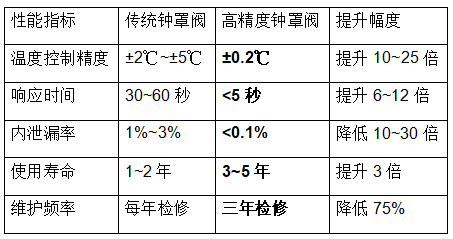
The regulation accuracy of traditional bell-shaped valves is usually within ±2°C to ±5°C, which is difficult to meet the requirements of precise temperature control for modern sulfuric acid plants. In actual operation, the inlet temperature often fluctuates by more than ±3℃, and sometimes even exceeds ±5℃, far beyond the allowable range of the optimal operating temperature window for the catalyst.
(2) Slow response speed and poor dynamic tracking ability
The traditional bellows valve's actuator is mostly of electric structure, with a slow response speed. It often takes tens of seconds or even longer from receiving the regulation signal to completing the valve position change. When facing load fluctuations, gas concentration changes, and other operational disturbances, traditional bellows valves are difficult to achieve rapid and accurate temperature tracking, resulting in persistent temperature deviations.
(3) Poor sealing performance and severe internal leakage
The sealing surfaces of traditional bellows valves are mostly planar seals. After long-term use, they are prone to wear and deformation, leading to an increase in internal leakage. Internal leakage not only causes energy loss but also disrupts the linear relationship of temperature regulation, resulting in a significant deviation between the actual and theoretical characteristics of the valve, further reducing the temperature control accuracy.
(4) Rapid mechanical wear and high maintenance costs
The transmission mechanism of traditional bellows valves is complex, with many moving parts. Operating in high-temperature environments for a long time, they are prone to jamming, wear, corrosion, and other faults. Frequent maintenance and repair not only increase labor costs but also affect the long-term stable operation of the unit.
2.3 Malignant cycle of poor temperature control
The above limitations of traditional bellows valves form a vicious cycle:
Low regulation accuracy → Large temperature fluctuations → Decrease in catalyst activity → Reduction in conversion rate → Frequent manual intervention by operators → Further intensification of temperature fluctuations → Accelerated catalyst deactivation → Shortened operation cycle of the unit
Breaking this vicious cycle lies in continuously optimizing the regulation performance of the bellows valve to achieve precise and stable control of the inlet temperature of one section.
3. High-precision Bellows Valve: Technical Breakthroughs and Core Advantages
3.1 What is a high-precision bellows valve?
A high-precision bellows valve is a new generation of temperature regulation equipment developed on the basis of traditional bellows valves through structural optimization, material upgrading, improvement of electric actuators, and enhancement of manufacturing processes. Its core design concept is: with higher regulation accuracy, faster response speed, better sealing performance, and stronger environmental adaptability, to achieve precise control of the inlet temperature of one section, compressing the temperature fluctuation range to within ±0.2℃.
3.2 Three core technologies of high-precision bellows valve
(1) Optimized flow path design
Through computational fluid dynamics (CFD) simulation to optimize the flow path structure of the valve body and bellows, reducing air flow disturbance and vortices, enabling the cold and hot gases to achieve sufficient and uniform mixing within the valve, avoiding temperature stratification and local overheating/underheating phenomena.
(2) High-performance equal percentage performance
Using special sealing materials resistant to high temperatures, corrosion, and wear, combined with precise machining of the regulating surface, ensuring the valve has good sealing performance throughout the full stroke, minimizing internal leakage and guaranteeing the equal percentage and repeatability of temperature regulation.
(3) High-reliability mechanical structure
Using modular design, reducing the number of moving parts, and selecting high-temperature-resistant, corrosion-resistant, and wear-resistant high-quality materials for key components, with special surface treatment, significantly increasing the service life and operational reliability of the valve. At the same time, equipped with fault diagnosis and alarm functions, facilitating the timely detection and handling of potential problems.
3.3 Performance indicators comparison of high-precision bellows valve
4. The Significance of ±0.2℃: How Does a High-precision Bellows Valve Extend the Lifespan of the Catalyst
4.1 Precise temperature control: The "guardian angel" for catalyst operation
The high-precision bellows valve controls the fluctuation range of the inlet temperature of one section within ±0.2℃. This seemingly small figure contains significant technical value and economic benefits.
(1) Ensuring the catalyst is always within the optimal active temperature window
Under the precise control of ±0.2℃, a section of the catalyst always operates within the optimal activity temperature range, maximizing the catalyst's activity and maintaining an SO₂ conversion rate of over 98.5%, and even reaching above 99%. The high conversion rate not only means a higher sulfuric acid production, but also indicates a reduction in the amount of SO₂ entering the subsequent processes, thereby lowering the load of tail gas treatment and environmental risks.
(2) Prevent temperature rollback and protect catalyst activity
As mentioned earlier, the catalyst has a positive temperature enhancement characteristic. Temperature rollback will cause irreversible activity loss. The precise control of the high-precision bell jar valve can significantly reduce the occurrence of temperature rollback, ensuring that the catalyst's activity only increases without decreasing, remaining stable and increasing, and maximizing the service life of the catalyst.
(3) Implement positive control of catalyst and activity improvement
Based on the precise control of ±0.2℃, operators can, according to the aging degree and operating status of the catalyst, implement a temperature positive control strategy - that is, in the initial stage of catalyst operation, the temperature is controlled at the lower limit of the optimal range; as the catalyst ages, gradually increase the temperature to the upper limit of the optimal range to compensate for the natural decline in activity. This "positive control" strategy ensures that the catalyst's activity remains at a high level, and the service life can be extended by 30% to 50%.
(4) Uniform bed temperature distribution and increase catalyst utilization
The optimized flow path design of the high-precision bell jar valve ensures uniform temperature distribution of the gas flow entering the converter, avoiding the formation of local hotspots and cold spots. The temperature distribution of the entire catalyst bed is more uniform, and the utilization rate of the catalyst is significantly improved, extending the overall service life of the bed.
4.2 Economic Benefit Calculation for Extended Catalyst Service Life
Taking a 600,000-ton/year sulfuric acid plant as an example, the catalyst filling volume is approximately 80 cubic meters, and the total value of the catalyst is about 1.6 million yuan. The normal service life is 5 years. After adopting the high-precision bell jar valve, the catalyst service life can be extended to 7-8 years, resulting in the following economic benefits:
(1) Savings in catalyst procurement costs
The service life of the catalyst is extended from 5 years to 7.5 years, with an annual average catalyst cost of 550,000 yuan per year, saving 2.5 million yuan annually.
(2) Reduction in unplanned shutdown losses
Under the traditional mode, unplanned shutdowns due to catalyst premature deactivation occur on average once every 2 years, with each shutdown loss (including production loss during the shutdown, maintenance labor costs, start-up costs, etc.) approximately 1.5 million yuan. With the adoption of the high-precision bell jar valve, unplanned shutdowns are basically eliminated, reducing annual shutdown losses by approximately 750,000 yuan.
(3) Increased production benefits from conversion rate improvement
Precise temperature control increases the SO₂ conversion rate by 0.3% to 0.5%, resulting in an annual increase in sulfuric acid production of 1,800 to 3,000 tons. At a sulfuric acid price of 300 yuan/ton, the annual increase in production benefits is approximately 540,000 to 900,000 yuan.
(4) Reduction in tail gas treatment costs
The increase in conversion rate reduces the amount of SO₂ entering the tail gas treatment system, resulting in a corresponding reduction in the consumption and operation costs of the tail gas treatment catalyst, with annual savings of approximately 200,000 to 300,000 yuan.
(5) Comprehensive economic benefits
The above items combined result in an annual direct economic benefit of approximately 1.75 to 2.20 million yuan after adopting the high-precision bell jar valve. The purchase cost of a high-precision bell jar valve is typically only 500,000 to 800,000 yuan, with an investment recovery period of less than half a year, and the economic benefits are very significant.
5. Selection and Usage Suggestions for High-precision Bell Jar Valves
5.1 Selection Key Points
(1) Select the appropriate specification based on the plant scale and operating conditions
The specification of the high-precision bell jar valve should be determined based on the processing capacity, gas flow, temperature, pressure, etc. of the plant. For large-scale equipment or those with significant operational fluctuations, it is recommended to choose models with a wider adjustment range and faster response speed.
(2) Pay attention to the performance of the actuator
The actuator is the core component of the high-precision bellows valve. Special attention should be given to its resolution, response speed, output force, and protection level. For important equipment, it is recommended to select an actuator with fault safety function to ensure that the valve can automatically return to the safe position in case of power failure or gas loss.
(3) Choose experienced suppliers
The design, manufacture, and commissioning of high-precision bellows valves require extensive experience and technical accumulation. It is recommended to choose suppliers with successful cases in the sulfuric acid industry, strong technical capabilities, and excellent after-sales service to ensure the long-term stable operation of the equipment.
5.2 Use and Maintenance Suggestions
(1) Commissioning before operation
After the high-precision bellows valve is installed, a comprehensive commissioning should be carried out, including valve position calibration, control parameter setting, and interlock tests, to ensure that the valve is in the best working condition.
(2) Monitoring during operation
During operation, regular checks should be conducted on the valve's operating status, including valve position feedback, temperature control accuracy, and internal leakage. It is recommended to use the trend recording function of the control system to analyze the temperature fluctuation patterns and promptly identify and address potential problems.
(3) Regular maintenance
Although the maintenance workload of high-precision bellows valves is much less than that of traditional valves, it still needs to be carried out regularly. It is recommended to conduct a comprehensive inspection once a year, including wear conditions of the sealing surfaces, lubrication conditions of the actuator, and functional tests of the control system.
6. Conclusion: Small Valves, Big Impact - High-precision Bellows Valve Leading the Technological Upgrade of Sulfuric Acid Plants
In the sulfuric acid production industry, the catalyst is the "heart" of the plant, and the bellows valve is the "gatekeeper" protecting this "heart". The traditional bellows valve has insufficient adjustment accuracy, exposing the catalyst to temperature fluctuations for a long time, accelerating aging and premature deactivation, causing significant economic losses to the enterprise.
The advent of the high-precision bellows valve, with its ±0.2℃ precise control capability, has erected a solid "defense wall" for the catalyst. It not only ensures that the catalyst always operates within the optimal temperature range, but also achieves continuous improvement in catalyst activity and a significant extension of its service life through a forward control strategy. Practice has proved that after adopting the high-precision bellows valve, the service life of the catalyst can be extended by 30% to 50%, the operation cycle of the plant can be increased by 8 times, and the annual comprehensive economic benefits can reach several million yuan.
Under the background of the "dual carbon" target and green chemical industry, the sulfuric acid industry is facing an urgent need for transformation and upgrading. The high-precision bellows valve, as a mature and reliable technical upgrade solution with significant economic benefits, is worthy of every sulfuric acid production enterprise to seriously consider and actively adopt. Let's work together to promote industry progress through technological innovation and safeguard the life of the catalyst through precise control, jointly creating a beautiful future for the long-term, high-efficiency, and low-consumption operation of the sulfuric acid plant!
【Technical Consultation and Cooperation】
If you are interested in the high-precision bellows valve or wish to learn more about the technical solutions for precise temperature control in sulfuric acid plants, please feel free to contact us at any time. We will provide you with professional technical consultation, scheme design, equipment selection, installation and commissioning, and after-sales service support throughout the process.